
Gum Disease Treatment Weston
Conquering Gum Disease Before It Harms Your Smile
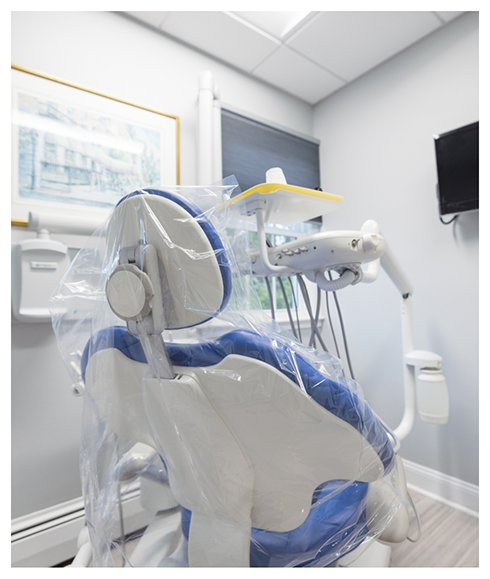
Gum disease affects a very large percentage of adults across the US, even though it’s also among the most preventable oral health conditions with routine hygiene. However, if things progress, you might notice bleeding or swollen gums, pain when biting or chewing, or even loose or shifting teeth that might eventually be lost. If you suspect you’re dealing with these issues, don’t hesitate to contact our Weston dental office today to set up an appointment and begin getting your oral health back on track with gum disease treatment.
Why Weston Dental Specialists Group?
- Highly Experienced, Board-Certified Periodontist on Staff
- Relaxing, Modern Dental Office with Patient-Comfort Amenities
- Advanced Technology Ensures Effective & Comfortable Treatments
The Dangers of Gum Disease
Gum disease is far more than a dental concern; left untreated, it can have serious consequences for your overall health! For one, it is the leading cause of tooth loss in adults; however, research has also linked advanced gum disease to an increased risk of heart disease, diabetes, stroke, and other systemic conditions. Because gum disease often progresses with few noticeable symptoms in its early stages, routine care and prompt treatment are critical to protecting your smile and your well-being.
Scaling & Root Planing
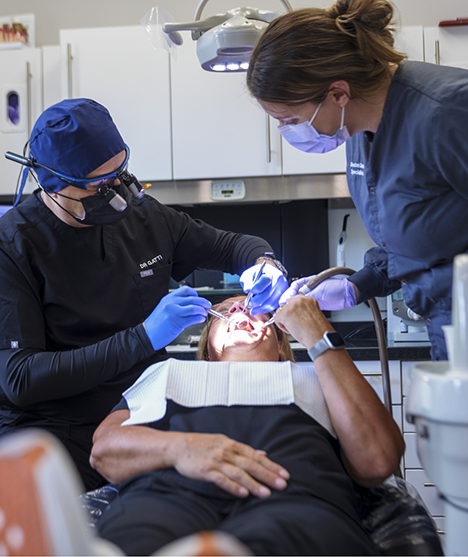
When gum disease advances beyond what routine oral hygiene can reverse, scaling and root planing is often recommended. This deep cleaning procedure involves carefully removing plaque and tartar buildup from below the gumline and smoothing the root surfaces of the teeth, which helps the gums reattach and heal properly. Most patients are surprised by how comfortable the process is, and many see significant improvement in their gum health afterwards.
Do I Need Scaling & Root Planing?

To determine whether scaling and root planing is right for you, we need to examine your gums. We will also take X-rays to obtain as much information as we can. Depending on the current state of your gum tissue, the depth of the pockets, and the progress of your gum disease, we might recommend scaling and root planing to keep your gum disease under control.
The Process of Scaling & Root Planing?
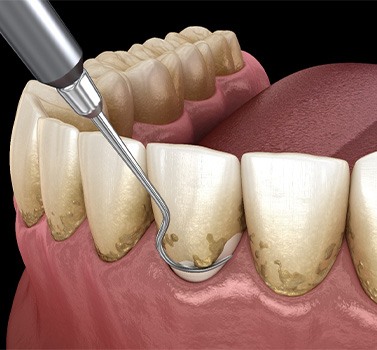
The scaling and root planing process is typically completed over the course of two appointments, but this can vary from patient to patient. To remove plaque and tartar, we start by scaling the teeth with dental tools. We will target the gumline and beneath the gumline where plaque, tartar, and bacteria build up.
Following the scaling portion, we will move on to the root planing part of the treatment. At this point, we smooth down sections of the teeth beneath the gumline. This helps the gums to adhere to the teeth, speeding up the healing process by making it more difficult for bacteria to build up going forward.
Aftercare Tips for Scaling & Root Planing

It is common for the gums to feel sore for a few days following scaling and root planing. You might see some inflammation in those areas too. This is temporary and should subside over the next few weeks. Here are some tips to help the healing process go as smoothly as possible.
- Brush twice per day with a soft-bristled toothbrush and fluoridated toothpaste
- Rinse your mouth with saltwater after meals
- Floss daily
- Stick to a soft diet after your treatment
- Avoid foods and beverages that are spicy, acidic, or hot
LANAP & LAPIP Laser Treatment
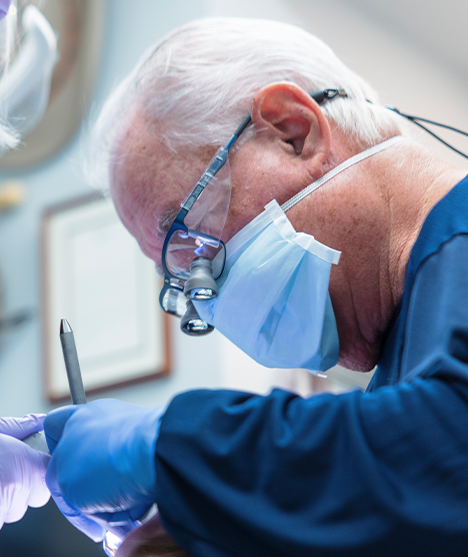
For patients with moderate to severe gum disease, LANAP laser treatment offers a highly effective, minimally invasive alternative to traditional gum surgery. Using a precise laser, our team targets and removes bacteria and diseased tissue along the gumline while leaving healthy tissue completely intact. Then, new tissue begins to regenerate in the area with significantly less discomfort, less inflammation, and a much faster recovery time.
For patients who have dental implants, LAPIP applies this very same advanced laser technology to address peri-implantitis, which is a gum infection that develops around the implants and can lead to implant failure if left untreated. By removing the infection early and precisely, LAPIP can protect your implant and restore the health of the surrounding tissue.
Gum Disease Treatment FAQs
Will I eventually lose my teeth to gum disease?
Tooth loss does not always have to be the reality when dealing with gum disease. If caught in its earliest stages – gingivitis – the symptoms can be reversed. However, if you fail to take proper care of your teeth and gums, and the infection spreads to the roots of your teeth and jawbone, the risk of tooth loss increases.
This is why it is essential to seek gum disease treatment in Weston to avoid more serious oral health problems. Not only can the untreated infection wreak havoc on your mouth, but it can also spread to other areas in your body, including your heart, brain, lungs, and kidneys.
How common is gum disease?
It is believed that gum disease is just as common as cavities among individuals living in the United States. The Centers for Disease Control and Prevention (CDC) estimates that nearly 4 out of 10 adults 30 years of age and older are suffering from some form of gum disease.
Nearly 60% of adults 65 years of age and older have a more advanced form known as periodontitis, and men are more likely to develop gum disease than women. In fact, the CDC suggests that only 1 in 3 women have it, while 1 out of every 2 men suffer from some degree of gum disease.
Is gum disease a dental emergency?
If you notice that your gums are bleeding, swollen, or tender, do not wait to call your periodontist for help. This is often considered a dental emergency and should be treated sooner rather than later. If caught in its early stages, it can be reversed. Treating the problem before it worsens is the most effective way to keep your oral health in check.
However, if you wait to see a periodontist about your condition, you risk developing periodontitis, which can affect your teeth, gums, jawbone, and overall health, resulting in lasting damage.
Can gum disease come back after it has been treated?
Once periodontitis forms, it cannot be “cured,” only managed. However, regardless of whether you have gingivitis or a more serious condition, gum disease can return after treatment. This often depends on how well you take care of your oral health. Just because your periodontist in Weston can remove harmful bacteria and encourage gum reattachment doesn’t mean the infection cannot return.
You must stay on top of your oral hygiene routine and continue to see your periodontist for regular follow-up appointments as instructed.